In the stainless steel supply and processing industry, risk is an inevitable factor throughout operational activities. However, the difference between businesses does not lie in completely eliminating risks, but in the ability to identify, control, and minimize their impact.
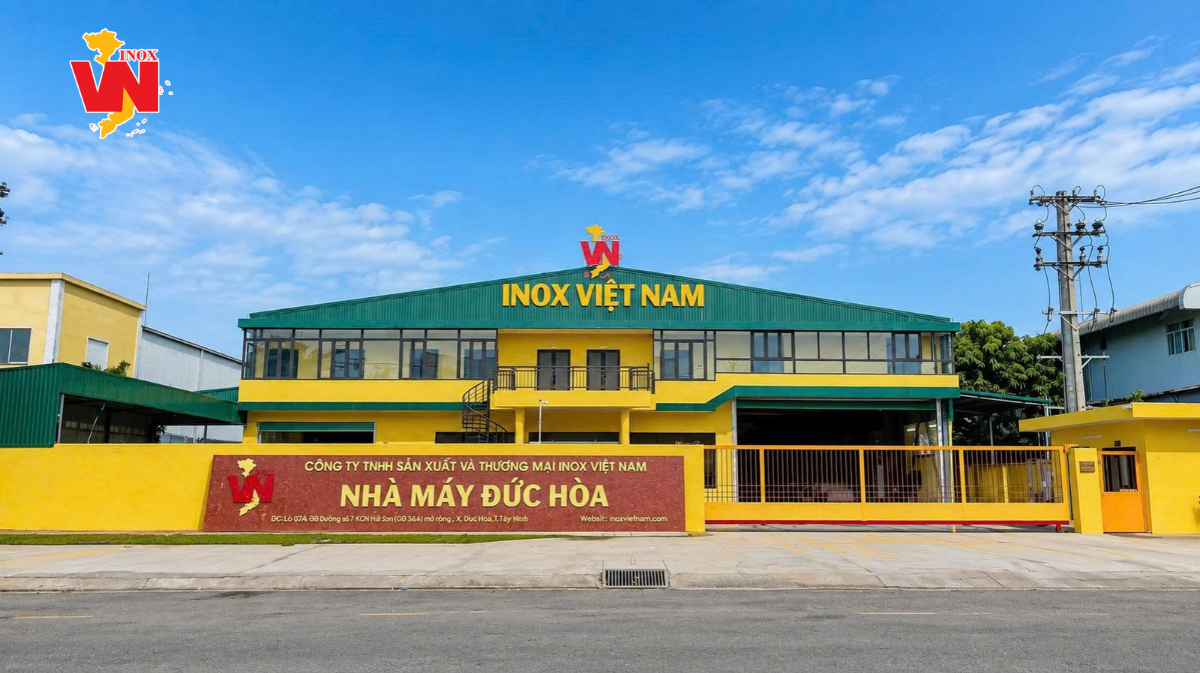
At Inox Viet Nam Manufacturing and Trading Co., Ltd., risk management is not simply a reactive solution to unexpected issues. It is an essential part of the operational system, designed to maintain stability throughout the stainless steel supply chain while ensuring project quality and delivery schedules.
RISKS IN THE STAINLESS STEEL INDUSTRY GO BEYOND DEFECTIVE PRODUCTS
In practice, technical deviations may arise from various factors, including:
- Incorrect steel grade delivery
- Surface finish mismatch
- Tolerance deviations
Delays during production and delivery coordination
In particular, misunderstandings or inaccuracies in technical requirements may result in entire material batches becoming unsuitable for actual applications, directly affecting project schedules, costs, and operational efficiency.
These are common variables within the stainless steel industry and must be controlled from the very beginning of the operational process.
RISK CONTROL STARTS FROM RAW MATERIAL SOURCING
At Inox Viet Nam, risk management begins with strict control of incoming raw materials.
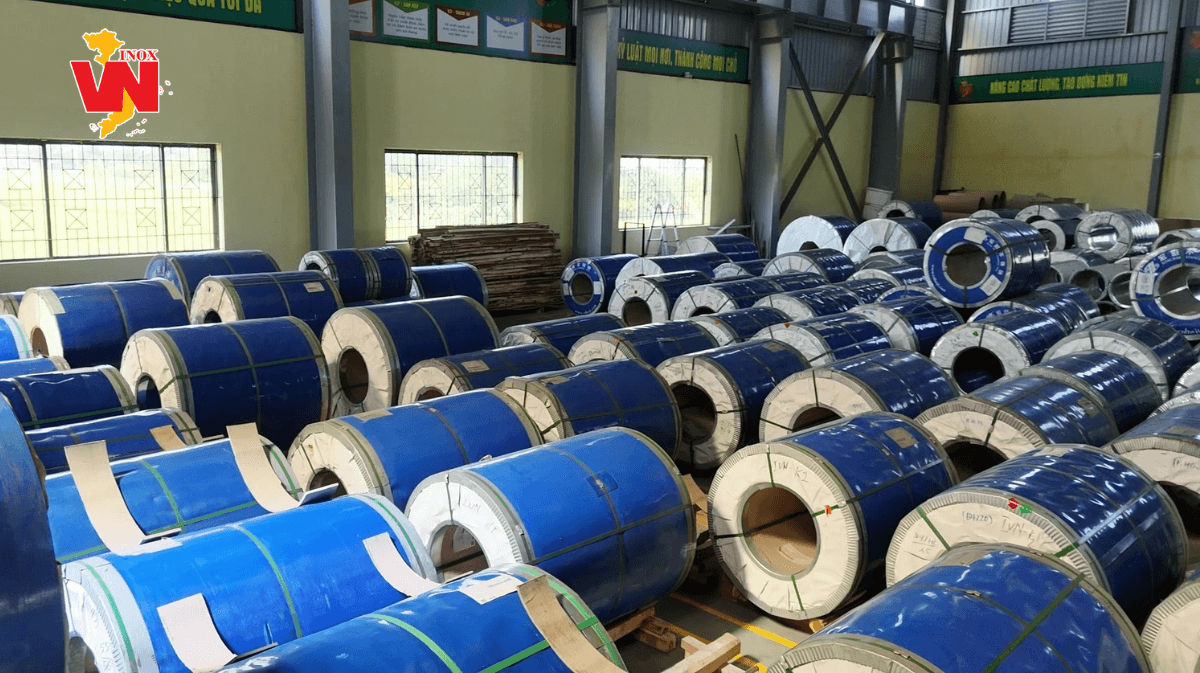
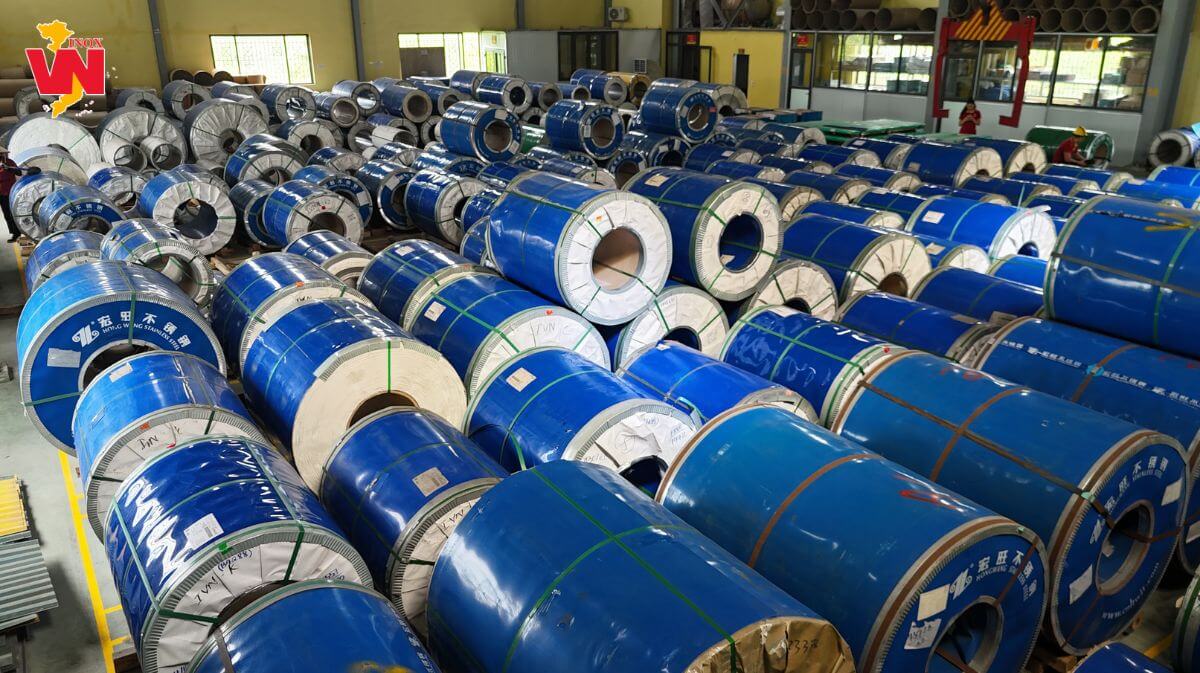
We only supply and process stainless steel products with clear origins and complete documentation regarding source verification and quality standards.
The process of checking labels and verifying steel grades before production is strictly implemented to minimize material discrepancies from the earliest stage.
This serves as a critical foundation for maintaining consistency and accuracy throughout the entire production process.
STANDARDIZED PROCESSING TO MINIMIZE DEVIATIONS
During processing operations, risks continue to be identified and controlled at each production stage.
Our cutting, slitting, CNC bending, and CNC laser cutting systems operate based on pre-confirmed technical parameters.
For stages that may affect the stainless steel surface quality, appropriate protective measures are applied to maintain material integrity throughout the processing workflow.
The standardization of processing procedures helps reduce technical deviations while maintaining consistency across different product batches.
MULTI-LAYER QUALITY CONTROL BEFORE DELIVERY
In industrial manufacturing, technical deviations may still occur during actual operations.
Therefore, Inox Viet Nam applies a multi-layer quality control mechanism to identify and eliminate non-conforming products directly at the factory.
Before delivery, all finished products are carefully reviewed against the original technical requirements to ensure:
- Dimensional accuracy
- Technical tolerances
- Surface condition consistency
This process minimizes operational errors while helping customers optimize project schedules and overall costs.
In addition, Inox Viet Nam’s supply capability is built upon stable raw material reserves and actual production capacity, ensuring continuous and reliable support for projects of various scales.
INOX VIET NAM – ENSURING STABILITY IN THE STAINLESS STEEL SUPPLY CHAIN THROUGH RISK MANAGEMENT
At Inox Viet Nam, risk management is not merely about handling issues after they occur.
It is about building a sufficiently structured operational system capable of controlling risks before they arise.
Through raw material control, standardized processing, and output quality supervision, Inox Viet Nam maintains stability in every shipment, protects project timelines, and builds long-term trust with customers.
Inox Viet Nam – Ensuring stability in the stainless steel supply chain through risk management.